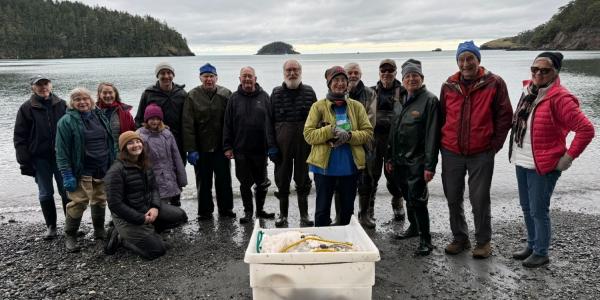
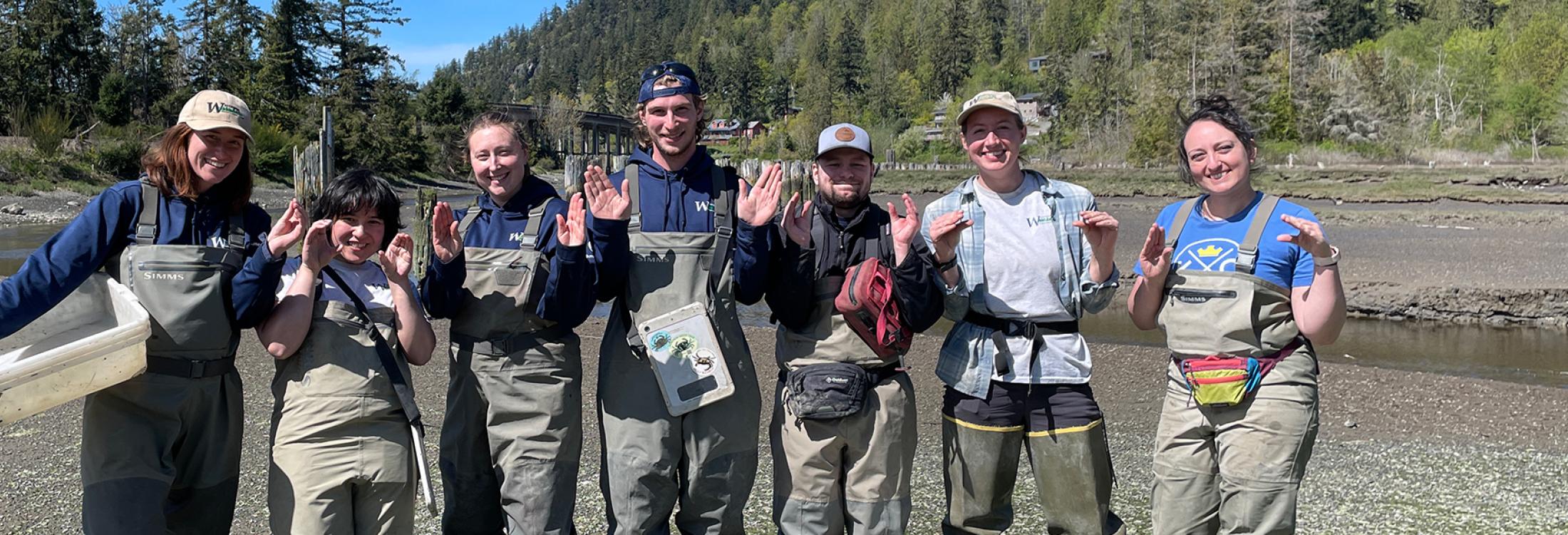

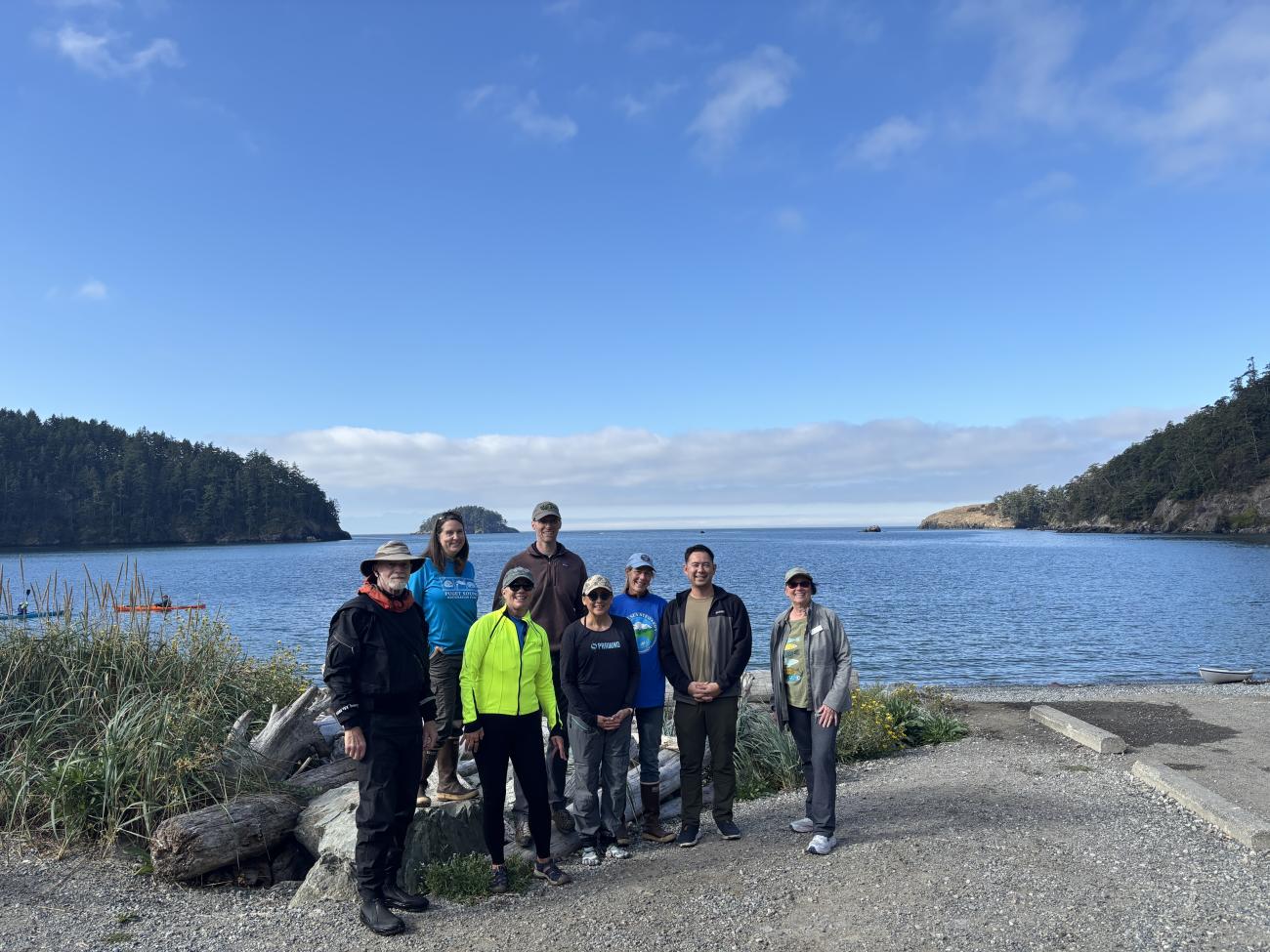
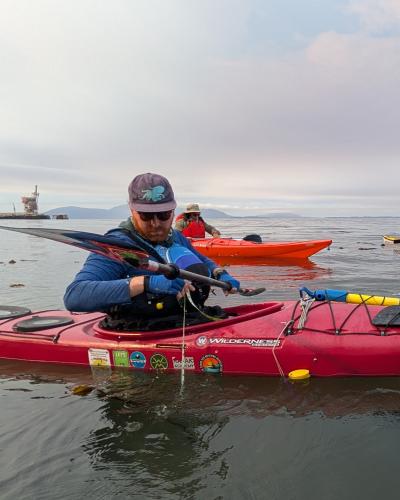


The MRC kelp kayak monitoring volunteers have completed another successful year of surveys, closing out the 2026 floating kelp monitoring season!
MRCs surveyed select kelp beds in the Northwest Straits region to continue tracking how these beds change across time. This included collecting information on bed size, depth, and condition, as well as water temperature and bed inhabitants. Collected data is used to inform local communities and commissioners, in various research projects, and in tools such as the Washington Floating Kelp Indicator and the new Floating Kelp Linear Extent Data Viewer.
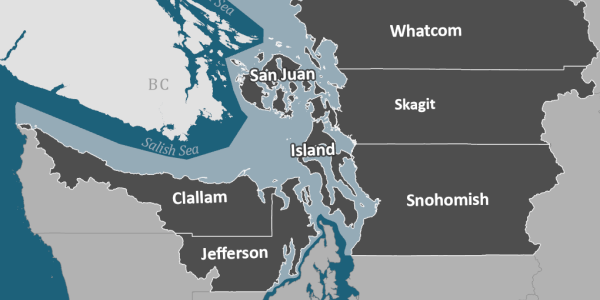
2026 highlights include: 50+ volunteers, 24 sites surveys (1-4 x each), across 6 counties
- Clallam MRC paddlers bolstered their ranks with new volunteers from a local kayak club. Volunteers observed many animals interacting with the kelp beds across their sites, from sea otters and harbor seals in Clallam Bay to feeding frenzies of gulls, diving seabirds, and adult salmon in Freshwater Bay.
- Island MRC kayakers gave a presentation about their kelp monitoring efforts to the NW Straits Commission at Ebey’s landing.
- Jefferson MRC kayakers observed the bed at North Beach extending further west than normal, but the outer perimeter of the eastern side appeared to be relatively lacking.
- Skagit MRC kayakers observed most of their monitored kelp beds appeared relatively dense and large. Although the Shannon Point East was relatively small, kayakers were happy to see it come back after being absent in 2025.
- Snohomish MRC kayakers observed the Edmonds kelp bed to appear stable and Hat Island kelp to be farther from shore than seen before, with new clusters of 20-30 bulbs.
- Whatcom MRC kayakers observed monitored kelp beds to be similar in size to previous years. One volunteer conducted pilot aerial drone surveys at the Aiston Preserve and Cherry Point sites, while others explored methods to document the linear extent of kelp that is observed when paddling between sites.
Now that surveys have wrapped, NW Straits Commission staff are compiling, processing, and analyzing the data. Results will be presented at the annual end of season review workshop in late January and will be made available to all on Sound IQ by early spring. Learn more on the kayak monitoring webpage.