
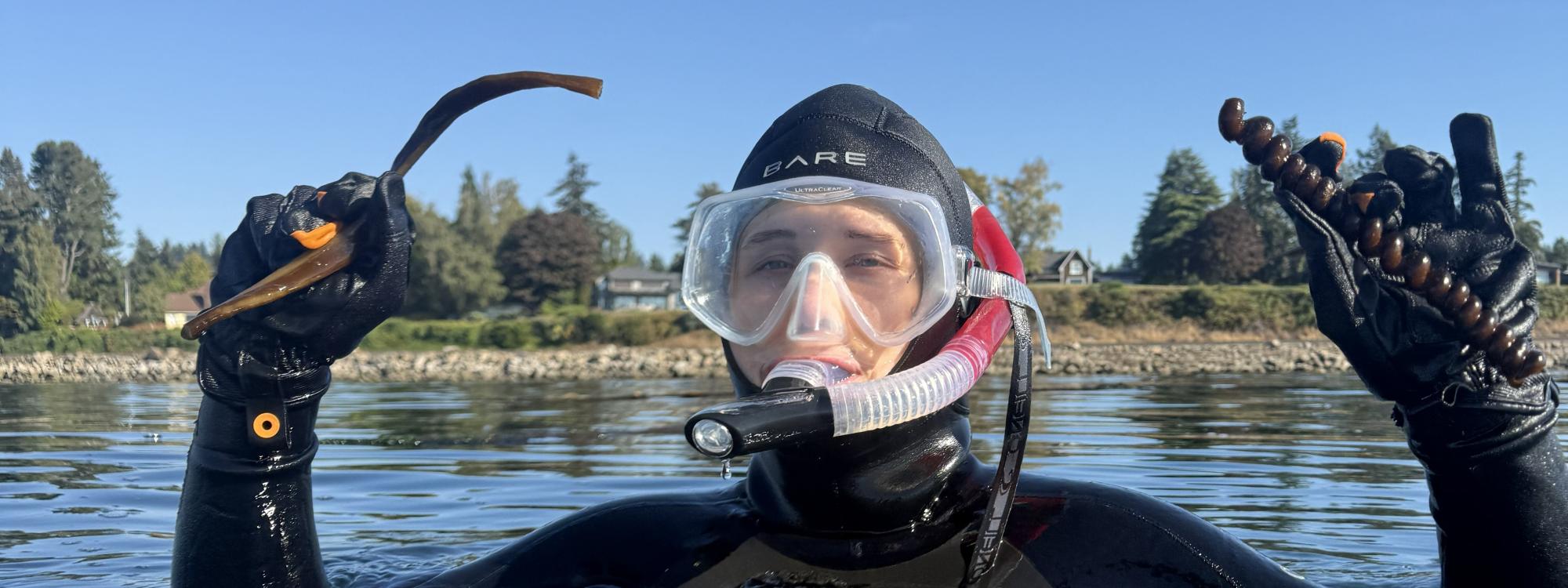
Brenly Lott: Snohomish County Marine Ecology Intern
(June–September 2026)
Brenly Lott served as the Snohomish MRC’s Marine Ecology Intern this summer to analyze nearly a decade of forage fish spawning data collected by the MRC and partners on county beaches. She started with just a basic understanding of forage fish, but once she dove into the long-term data and she was fascinated and wanted to learn what shapes their spawning patterns. With support from MRC volunteers, county staff, and WA Dept. of Fish and Wildlife partners, she gained valuable insights into the roles forage fish play across nearshore and estuarine habitats.
“Forage fish are really the unsung heroes of marine ecosystems.”
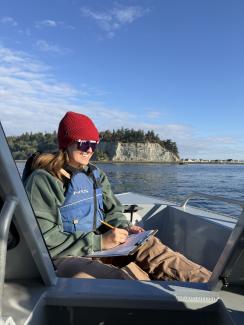
Fieldwork was a highlight of her internship, including a particularly magical visit to Hat Island where the team encountered two gray whales foraging in kelp beds! Brenly’s experience showed her the connection between healthy shorelines and the marine species that depend on them and how restoration efforts can improve habitat. She was surprised by how much forage fish rely on different habitats throughout their life cycle.
In Fall 2026, Brenly began her graduate studies at University of Washington’s School of Marine and Environmental Affairs. She will continue to draw on her MRC experience as she pursues community-based environmental work. She hopes community members recognize the value of ongoing forage fish monitoring and consider getting involved locally. Brenly will also be supporting Washington Sea Grant’s aquaculture education programs, and is excited to keep growing her expertise here in the Puget Sound region.
In Fall 2026, Brenly began her graduate studies at University of Washington’s School of Marine and Environmental Affairs. She will continue to draw on her MRC experience as she pursues community-based environmental work. She hopes community members recognize the value of ongoing forage fish monitoring and consider getting involved locally. Brenly will also be supporting Washington Sea Grant’s aquaculture education programs, and is excited to keep growing her expertise here in the Puget Sound region.
“Getting involved through local MRCs supports healthier landscapes and brings connection and purpose, it’s what it’s really all about.”
Read Brenly’s final report: Beyond Grain Size: Environmental and Seasonal Drivers of Surf Smelt and Sand Lance Spawning Habitat Use in Snohomish County